


Acrygels
in category: Acrygels
Chosen
Price
Vendor
New
On sale
Acrygel combines the strength of acrylic with the comfort of working with a gel, which is why nail stylists who build hard, stable structures like to reach for it. In this category you will find two Julia Nessa ranges: Dual AcrylicGel in a jar – the hardest product in the brand, made for working on forms, dual forms and 3D nail art – and the liquid Liquid AcrylicGel versions with a self-levelling consistency, intended mainly for strengthening the natural nail plate.
Below we compare the two ranges, suggest how to choose the shade and size, and describe working with the material step by step.
List of products









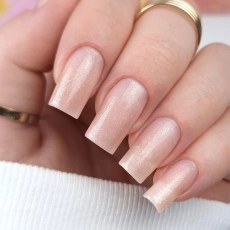
What is acrygel for nails? Acrylic and gel through a nail stylist's eyes
Materials of this type were created to combine the advantages of two systems. From acrylic they take hardness and the durability of the structure, from gel – comfortable work and the need to cure in a lamp. The product does not set in the air, so you can calmly refine the shape of the nail and only then cure it. As a result, it is easier to control the proportions, the apex and the free edge line.
In the Julia Nessa range both types of material are intended for professional use. They differ in the way they are applied, their consistency and curing time, so it is worth getting to know them better before you choose a product for your nail desk. If you work with a gel system every day, switching to these products does not require changing your whole way of working – nail preparation and the base look similar.
The acrygel offer is made up of two ranges – when to choose Dual acrygel and when Liquid?
Dual AcrylicGel – a hard structure shaped with a tool
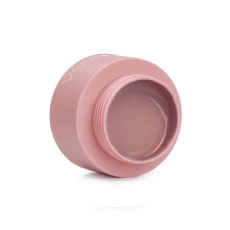
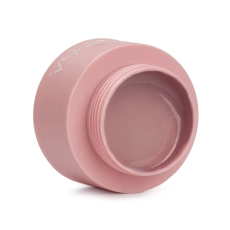
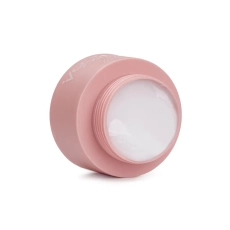
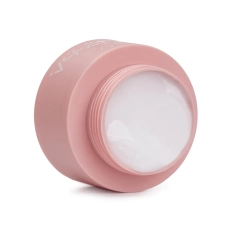
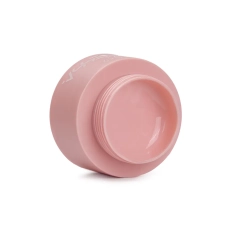
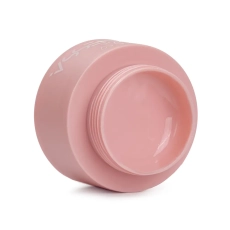
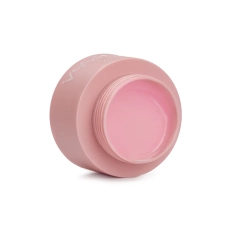
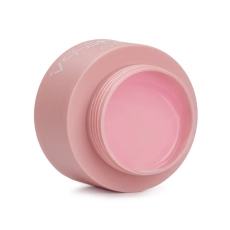
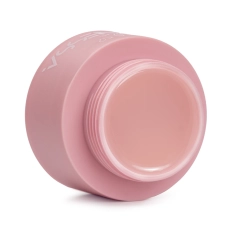
Dual AcrylicGel is a combination of acrylic and gel available in a jar, in sizes of 15 ml and 30 ml. It is by far the hardest Julia Nessa product for nail sets. To apply it you need a nail cleanser, isopropyl alcohol or acetone – the material is shaped with a brush or an orange stick lightly moistened with the liquid. The consistency gives you full control over the product, with no worry about flooding the cuticles.
- hardness and adhesion,
- you can build 5 nails at once – the material does not creep under the free edge,
- it can be pinched,
- made for extreme shapes and 3D nail art,
- lets you fill in missing edges without placing a form,
- you can combine it with standard gel or gel polish products.
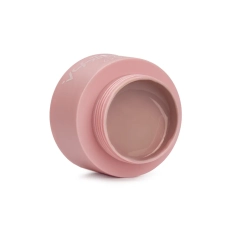
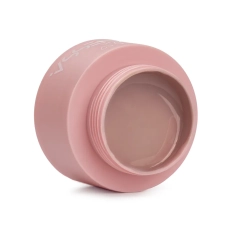
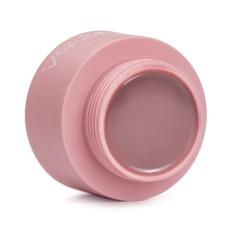
The range includes the shades Blush, Milky, Natural, Pink and Pink Rose. You can build a milky structure with, for example, Dual AcrylicGel Milky 15 ml, and a natural tone is given by Dual AcrylicGel Natural 30 ml. The curing time in a 48W DUAL LED lamp is 90 seconds. For shaping you can use, for example, the Acrylic-Gel brush from the Julia Nessa range.
Liquid AcrylicGel – the liquid version for strengthening the natural nail plate
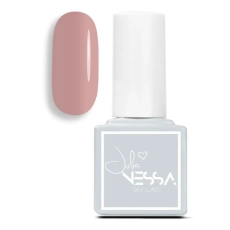
The liquid versions are hard products that combine the strength and durability of acrylic with the comfort of working with a gel. They were created for strengthening natural nails and building nail sets resistant to mechanical damage. The medium, self-levelling consistency lets you spread the material precisely and evenly – it does not run onto the cuticles and you stay in control while you work. Their features are hardness, adhesion, no yellowing and excellent compatibility with the nail plate.
The 12 ml version comes in a bottle with a brush, and a 50 ml version in a jar is available separately – choose the larger size for the shades you use the most. Curing takes 30 seconds in a 48W DUAL LED lamp.
Nail extensions with acrygel on a form and a dual form
The Dual range was created with long and extreme shapes in mind. You work with it on a form, that is, a nail form placed under the free edge, or on upper forms. Hardness and the option to pinch help to keep a perfect shape even with long structures, and when your client breaks off part of the free edge, you can fill in the missing edge without placing a form. In addition, building five nails at once speeds up work in the salon. It is a good choice for extending and modelling nails with a demanding architecture.
Of the liquid versions for lengthening nails, we recommend first of all the transparent Liquid AcrylicGel Clear 12 ml. Its formula works well for delicate extensions and overlays. The classic, warm Pink helps with both lengthening and overlays. Before choosing the technique, assess whether your client needs extra length or mainly strengthening – this decides which range will be more comfortable.
Where does acrygel work well? Strengthening the nail plate, nude manicure and 3D nail sets
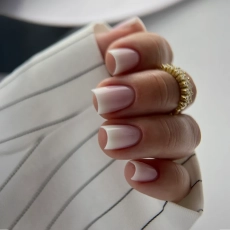
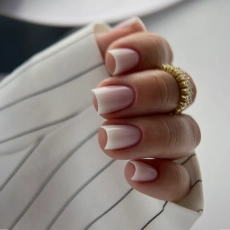
The choice of shade depends on the effect you want to achieve for your client. You choose a transparent material when the colour will be applied later. Beiges and pinks let you build the structure straight away in a natural tone, which makes a neat nude manicure, French and baby boomer easier. When choosing, also think about whether the structure is to stay visible in a natural tone or serve as a base for further nail art.
- Natural beige – Light Beige 12 ml works well for nude, French and baby boomer nail sets, and also as a base under other colours.
- Milky pink – Milky Pink is a subtle, milky-pink shade for elegant nail sets; in the large size you can buy it as Milky Pink 50 ml.
- Delicate pinks – the light pink, slightly warm Soft Pink 12 ml subtly highlights the natural colour of the nail – on short and long nails; cooler tones are Light Pink and Pastel Pink.
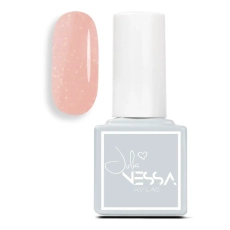
- With glitter – Pink Gold 12 ml is a pink shade with subtle gold glitter, for classic, French and nude nail sets.
- 3D nail art and very strong structures – choose the Dual range here, for example Dual AcrylicGel Pink Rose 30 ml.
The palette of liquid versions is completed by, among others, Natural Beige, Dusty Rose and Natural Gold – so you can match the tone to the natural colour of the nails and the design. If you are only putting your set together, start with one transparent shade and one beige or pink, and add more as your clients need them.
Who are these types of nail products for?
Both ranges were created with nail stylists working in professional salons and studios in mind. You will appreciate Dual AcrylicGel when you do long shapes, structures on forms and 3D nail art, and speed counts in your schedule – being able to build several nails at once lets you work comfortably without rushing. The liquid versions are convenient for regular clients who come mainly for strengthening the natural nail and a neat, even shape.
You can also use both solutions: the Dual range for extensions on forms and repairs, and the liquid material for everyday strengthening. Standard gel can still remain part of your work – you can combine it with the Dual range.
If gel is your basic material and your clients increasingly ask for very long or strongly contoured shapes, the Dual range lets you widen your offer without giving up the stages you trust. You only need to master shaping with a tool moistened with nail cleanser and adjust the curing time.
Mistakes when working with acrygel and how to apply the material
The order of work is similar in both ranges. You apply the material onto a prepared nail and a cured base, and the differences concern modelling and curing time:
- Prepare the nail, apply the base and cure it in the lamp.
- Place the right amount of product on the nail – from the Dual range it is most convenient to take a portion from the jar with a clean spatula.
- With Dual AcrylicGel, dip the brush or orange stick in nail cleanser; spread the liquid version so as to get the shape you want.
- Cure the material, adjusting the time to the power of your lamp, and then refine the shape with a file or an e-file.
Most problems are usually caused by rushing. A tool that is too wet makes the material harder to shape, skipping nail preparation weakens adhesion, and too short a time in the lamp or too thin a layer increases the risk of cracks. Remember too that the product must not touch the skin – work at a distance from the nail folds. Keep the spatula and tools clean, and close the jar straight after taking a portion, to protect the contents from light and contamination.
Durability of the nail set and safety – frequently asked questions
All materials in this category are intended for professional use and are applied only to a healthy, undamaged nail plate. Avoid contact with the skin and eyes, and exposure to dust when filing. Store the liquid versions at a temperature of 5–30 °C, in a tightly closed original package, away from sunlight.
What is the difference between the Dual and Liquid ranges?
Dual AcrylicGel is shaped with a tool and a little nail cleanser, can be pinched, and lets you build extreme shapes. The liquid version has a self-levelling consistency and is used mainly for strengthening natural nails.
How do I remove the nail set?
The structure is removed mechanically – tungsten carbide bits are suitable for removing the material, and you can finish it with a file.
How long does curing take?
In a 48W DUAL LED lamp the Dual range needs 90 seconds, and the liquid versions 30 seconds. With lamps of a different power, adjust the time to their parameters.
Can the Dual range be combined with gel and gel polish?
Dual AcrylicGel can be combined with standard gel or with gel polish products. The differences between the types of material are also explained in our guide to nail gels.