


Gel Removal Bits
in category: Gel Removal Bits
Chosen
Price
Vendor
New
On sale
Which Gel Removal Bit to Choose
Two materials are used for taking a nail set off, and they differ in strength. Mixing them up is the most common mistake when buying.
Tungsten carbide copes with builder gel, acrygel and acrylic. The blades cut cured product layer by layer, so the tool efficiently removes even a thick structure.
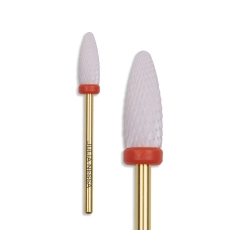
Ceramic is meant only for gel polish. The ceramic bit with the red marking is too gentle to take off a gel or acrygel manicure - with that kind of set you will struggle and the tool will wear out faster. Ceramic has a different advantage, though: it is very resistant to cracking and mechanical damage.
All the models in this category have a 2.35 mm (3/32") shank, so they fit all the most popular cosmetic e-files.
List of products


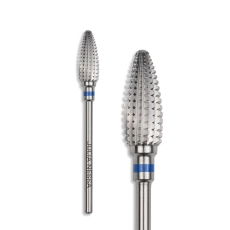
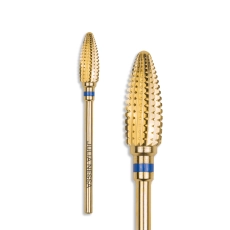
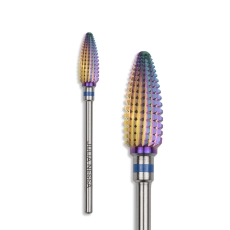
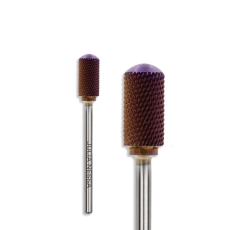
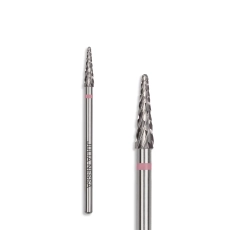
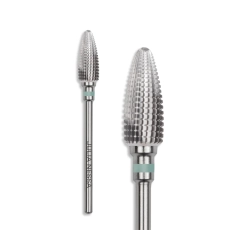

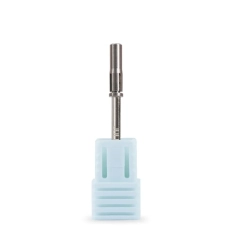
Tungsten Carbide Gel Removal Bits
These are the basic tools for removing a nail set. They differ in head shape and working strength, and the choice depends on what you want to take off and how confident you feel with an e-file.
No.1 - a cone, the most universal model in our range. It narrows towards the end, so you work with the side of the head on the nail surface or with the narrower part closer to the edge. Sharp and durable at the same time - its lifespan reaches over a dozen months. It removes gel, acrylic and hybrid (gel polish) build-ups. It is also available in the colour variants Gold and Rainbow - the same model in a different colour, so you can tell it apart at your nail desk straight away.
No.4 - a gentler version of No.1. The same cone shape, but a milder way of working. Choose it where you need more control and precision, especially close to the natural nail plate.
No.2 Cameleon - a cylinder with a gentle head, meant for people who are just starting to work with an e-file. The milder blade gives you more control over how much product comes off.
No.3 O! Choinka - a Christmas-tree shape of medium strength. Made for working on the underside of the nail, it suits infills of gel sets and work on dual forms.
Dual - a model with two tips. It is used to clean the place where the product meets the natural nail plate. It is useful at infills, for correcting drooping nails and for work with dual forms.
The blades in all models are laid out so that both right- and left-handed users can work with them comfortably.
Ceramic Bit for Removing Gel Polish
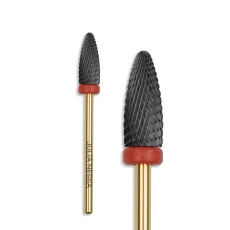
The ceramic bit for removing gel polish comes in two colours: black and rose gold. Both are used to remove a layer of gel polish from your client's nail plate.
Ceramic bits are very resistant to cracking and mechanical damage, so they stay in good working order for a long time. The 2.35 mm shank fits the e-files found in most nail salons.
Just remember the limitation: this type of bit is not meant for removing a builder gel or acrygel manicure. For that you need a tungsten carbide tool.
The Best Gel Removal Bit - Which Model for Whom
You are starting out with an e-file - choose No.2 Cameleon. The gentle head forgives more mistakes, and you learn the feel without fighting the tool.
You work confidently and speed matters to you - No.1. The sharp cone takes product off quickly, and you do not need to press it onto the nail.
You need precision at the regrowth area - No.4 or Dual. Both let you work in a controlled way on the place where the product meets the natural nail plate.
You work from underneath and on dual forms - No.3 O! Choinka.
You are removing gel polish only - a ceramic model is enough.
If you are going to have only one bit, make it No.1 - it handles gel, acrygel and gel polish. A second shape only becomes useful at infills and when working from underneath.
How to Remove a Nail Set Safely with an E-File
- Work at medium speed. High speed will not make the work faster, but it raises the risk of heating the nail.
- Guide the tool flat, using the whole length of the head rather than just the tip.
- Do not press. A sharp tool takes product off by itself - pressure is the main reason a client feels heat.
- Remove product in layers and pause often to judge how much is left above the nail plate.
- Leave a thin layer over the natural nail - take off the rest with a nail file or a sanding cap.
- Switch to a gentler model at the regrowth area.
Safe removal means not going down to the natural nail plate. A worn-down nail plate is not a question of a bad tool, but of too much pressure and working with the tip.
Mandrels and Sanding Caps
Besides bits, you will find two holders for sanding caps here: the Mandrel and the Mini Mandrel, both made of stainless steel. You put a replaceable cap on them, fit them in the e-file chuck and work, replacing a used cap with a new one.
Both are precisely balanced, so the tool does not vibrate during work. This matters for comfort - a steady tool is easier to guide precisely along the nail folds and the edge of the nail. You will find caps in different grits in the sanding caps for mandrels category.
Bit Sets
If you are building your nail desk from scratch, it is simpler to take a ready-made set. Each contains four cuticle bits and Gel Removal Bit No.1, and they differ in how they are matched to your client's skin type.
Manicure Set 1 - models No.15, No.5, No.9, No.16 and Gel Removal Bit No.1.
Manicure Set 2 - models No.2, No.17, No.15, No.3 and Gel Removal Bit No.1. Matched to dry skin that is not too thick.
Manicure Set 3 - models No.7, No.3, No.4, No.11 and Gel Removal Bit No.1. For flat, thin cuticles.
Cleaning and Sterilisation
After every client the tool needs to be cleaned of dust, washed, disinfected and sterilised. All Julia Nessa bits tolerate disinfection and sterilisation well. Dust collects between the blades, and if you do not remove it, the tool starts to work worse, even when the blade itself is still sharp.
A well-kept tungsten carbide bit works for over a dozen months. A neglected one goes blunt faster, and with a blunt tool you have to press - which risks heating the nail. That is why cleaning is not only about hygiene but also about comfort of work.
Gel Removal Bits - Frequently Asked Questions
Can I remove gel with a ceramic bit?
No. The ceramic bit with the red marking is too gentle for gel and acrygel sets. To remove gel, use a tungsten carbide tip.
Which gel removal bit is best for beginners?
No.2 Cameleon. The cylinder with a gentle head gives you more control, so it is easier to learn to work with it without damaging the nail plate.
Do these bits fit my e-file?
The shank is 2.35 mm, that is 3/32" - a standard supported by all the most popular cosmetic e-files.
Why does my client feel heat?
Most often because of too much pressure or working with a blunt tool. A sharp bit takes product off without pressure, and then the nail does not heat up.
How long does one bit last?
Tungsten carbide models stay sharp for over a dozen months, as long as you clean them regularly after every treatment.
What is the difference between a carbide and a ceramic bit?
The material and the working strength. Tungsten carbide removes any cured product, while ceramic is gentler and is used only for removing gel polish.